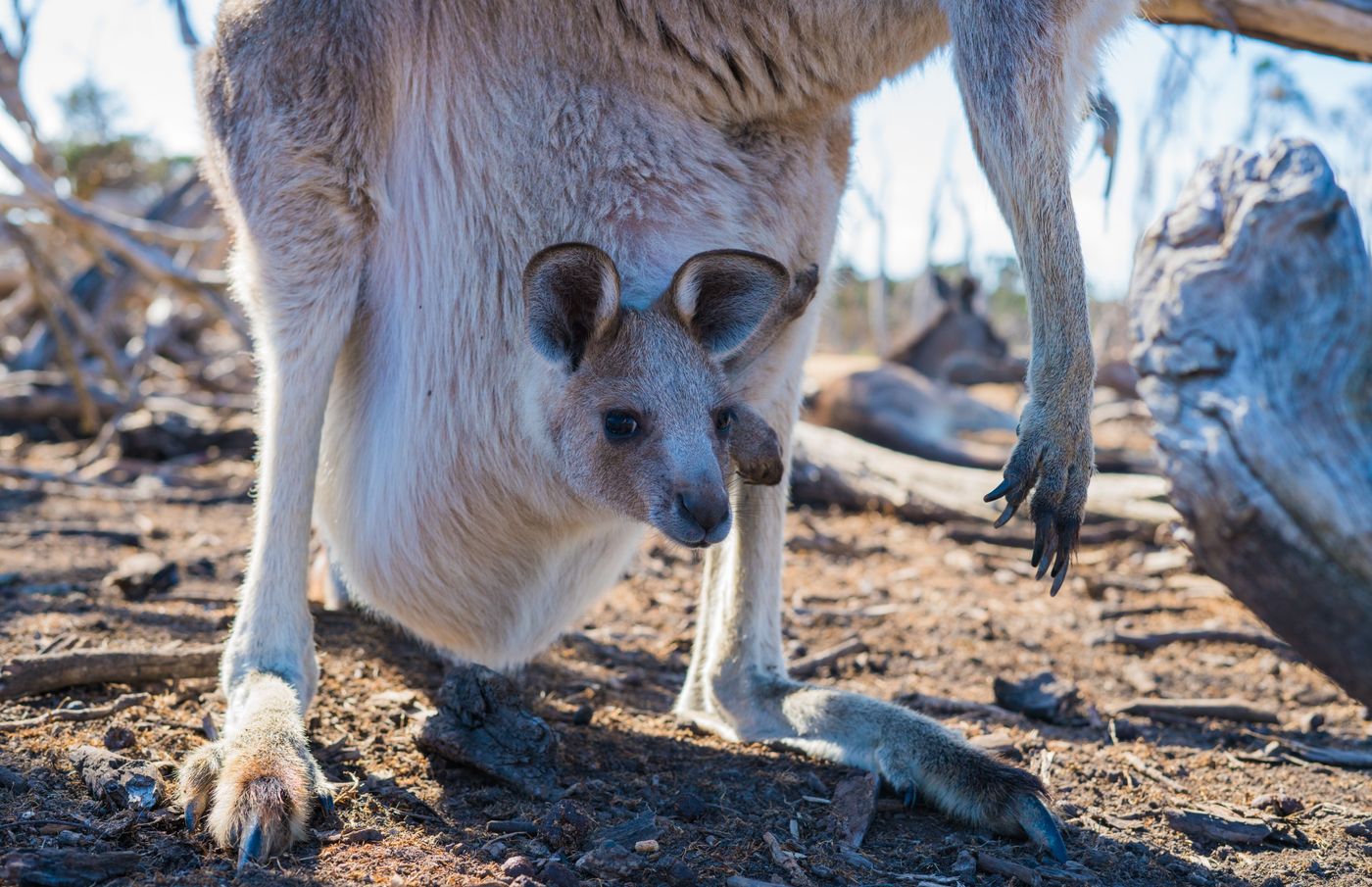
Australia evolved on its own for 50 million years, producing wildlife that exists nowhere else on the planet: marsupials carrying their young in pouches, monotremes that lay eggs and feed milk through pores in their skin, fluorescent-glowing platypuses, blue-tongued lizards, lyrebirds that mimic chainsaws. Encountering these animals in the wild - rather than in cages - is one of the great Australian travel experiences. Here's where to do it in 2026, with operators that put welfare first.
Kangaroos on the Beach - Lucky Bay, WA
The Cape Le Grand National Park outside Esperance contains Lucky Bay - repeatedly named one of the world's most beautiful beaches, with the rare bonus that mobs of wild western grey kangaroos regularly lounge on the white sand. Best at sunrise (the kangaroos rest on the beach overnight and into the morning). Stay in Esperance and drive 45 minutes; camp at the Lucky Bay campground for the dawn shoot.
Quokkas - Rottnest Island, Perth
The "happiest animal in the world" - small, smile-faced marsupials found wild on Rottnest Island, a 30-minute ferry from Fremantle. Friendly, curious, photo-cooperative. Do not touch or feed them - both are illegal and damaging. The famous "quokka selfie" is taken by lying flat on the ground and waiting; they'll usually approach. Bikes are the way to get around the car-free island. Pre-book the Rottnest ferry and bike package to skip Fremantle queues.
Wild Koalas - Magnetic Island & Kennett River
Wild koalas are surprisingly hard to find - they spend 18+ hours a day asleep in eucalyptus canopy. The two best wild-sighting spots in Australia:
- Magnetic Island, Queensland - the Forts Walk (1.5 hours return) consistently delivers wild koala sightings in the gum trees overhead
- Kennett River, Great Ocean Road - the Grey River Road forest is a reliably dense koala habitat
- For guaranteed close encounters in ethical settings, Lone Pine Sanctuary (Brisbane) is the world's largest koala sanctuary
Platypus - Eungella National Park
The platypus - perhaps the most extraordinary animal on the planet - is shy, nocturnal, and notoriously hard to spot. The Broken River at Eungella National Park (one hour from Mackay, Queensland) is the world's most reliable wild platypus viewing site. Dawn and dusk; sit quietly on the elevated platforms and wait. Tasmania also offers good sightings at the Platypus House (Beauty Point).
Whales on Migration
- Hervey Bay, Queensland - humpback whales pause here on their southern migration; July-November sightings near-guaranteed
- Sydney - the Headland Walks at North Head and South Head deliver free shore-based whale watching June-November
- Albany, WA - southern right whales calve in the Great Australian Bight, June-October
- Ningaloo Reef, WA - swim with whale sharks (March-July) and humpbacks (August-October)
Tasmanian Devils - Maria Island & Sanctuary
Tasmanian devils are critically endangered in the wild due to facial tumour disease. The Bonorong Wildlife Sanctuary outside Hobart and Devils@Cradle at Cradle Mountain run conservation breeding programmes with ethical viewing. The disease-free wild population on Maria Island (a day-trip from Hobart) is the only place to see them genuinely wild.
Wombats - Cradle Mountain & Kangaroo Valley
Wild common wombats can be spotted at dusk grazing the grasslands around Ronny Creek in Tasmania's Cradle Mountain National Park, or on the slopes of Kangaroo Valley NSW. Bare-nosed wombats are at their most active 30 minutes after sunset.
Saltwater Crocodiles - Kakadu & Daintree
Australian "salties" are the world's largest reptile, can exceed 6 metres, and live in any tropical-north waterway. They are absolutely not to be approached unaccompanied. The Yellow Water Cruise in Kakadu and the Daintree River cruises from Cape Tribulation are the safest, most reliable viewing experiences. Always swim only in croc-cleared waterholes; never assume.
Snorkelling with Whale Sharks - Ningaloo
The Ningaloo Reef in Western Australia is the only place in Australia (and one of few worldwide) where you can reliably snorkel with whale sharks - the world's largest fish. Operators guarantee a free repeat trip if no sighting. Season runs March to July peak. Book Ningaloo whale-shark experiences several months ahead.
Ethical Wildlife Watching - The Rules
- Never feed wild animals - it's illegal, harms their health, and damages natural behaviour
- Never touch or chase animals for photos - quokkas, koalas, kangaroos are wild even when they look approachable
- Choose sanctuaries certified by Zoo & Aquarium Association Australasia - they meet strict welfare standards
- Avoid "koala cuddle" attractions in NSW, ACT and VIC - these are illegal in those states; Queensland still permits them but ethical opinion is shifting
- Don't drive at dawn or dusk on rural roads - kangaroo strikes kill thousands of animals annually
- Carry a rescue contact (WIRES nationwide) if you encounter injured wildlife