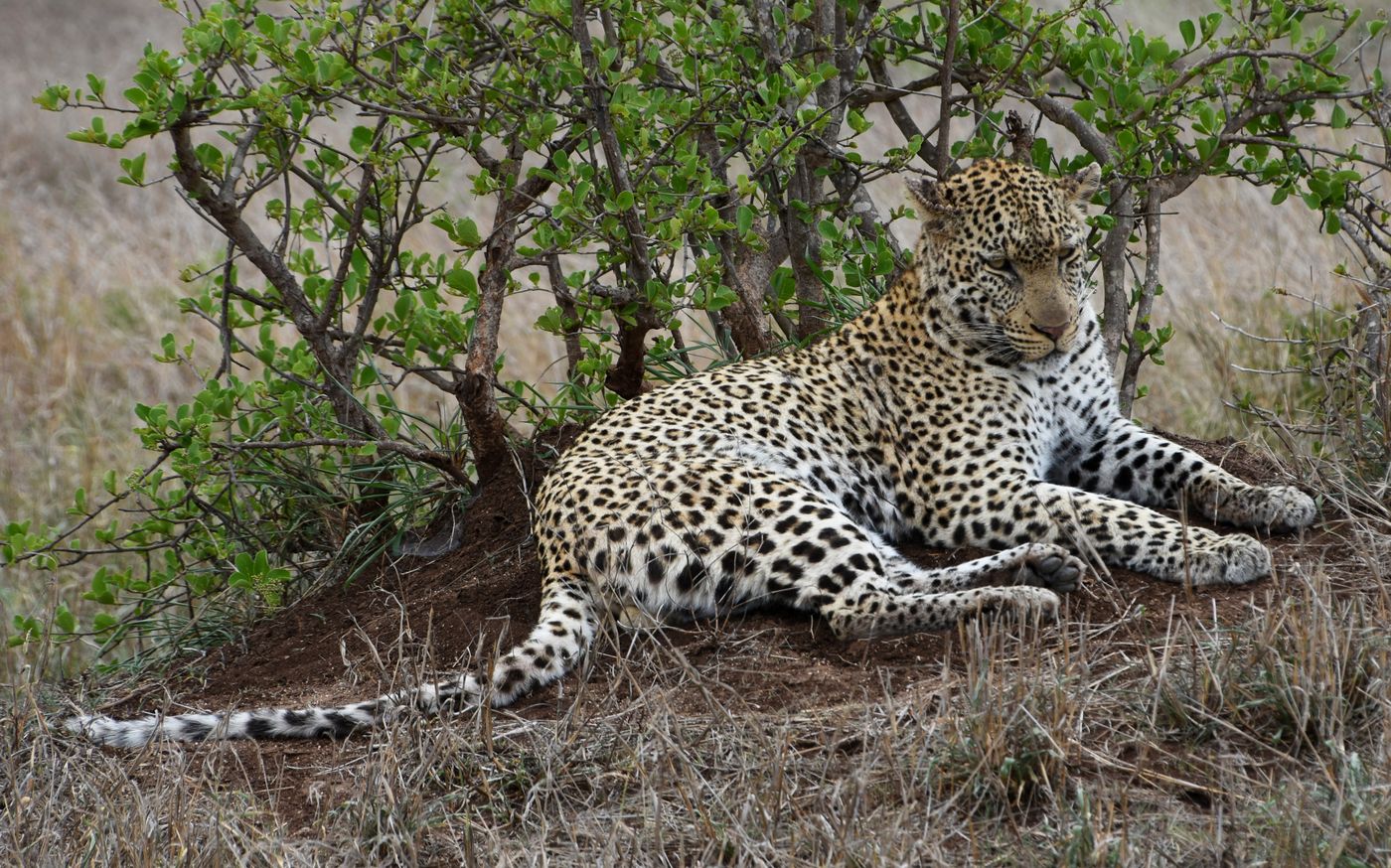
Kruger National Park offers public-entry self-drive safaris, while adjacent Sabi Sand is a private game reserve with different lodging and guiding arrangements. Neither can promise sightings of leopards or any other wild animal. Choose between them by the experience you want, not a guaranteed photograph.
Read our full Kruger National Park guide for a broader park overview.
Kruger vs Sabi Sand - The Critical Decision
- Kruger National Park: public park; self-drive permitted; rest camps from USD 80/night; SANParks lodges and private concessions for upmarket experiences; high vehicle traffic at sightings; you must stay on tar/gravel roads in the public sections
- Sabi Sand Game Reserve: private reserve adjacent to Kruger; no fence between; off-road driving permitted; night game drives permitted; vehicle limits at sightings (max 3 vehicles); legendary leopard habituation; USD 800-5,000/night lodges
For genuine luxury safari, Sabi Sand is unambiguously the better choice. For value or self-drive, Kruger.
Top Sabi Sand Lodges
- Singita Boulders Lodge / Ebony Lodge - the gold standard; the lodge that defines African luxury safari
- Londolozi Founders Camp / Tree Camp / Pioneer Camp / Granite Suites - the legendary Varty family lodge, four distinct camps in different styles
- Lion Sands Ivory Lodge / River Lodge / Tinga Lodge / Narina Lodge - the More family group; multiple lodge options on the Sabie River
- Sabi Sabi Earth Lodge / Bush Lodge / Selati Camp / Little Bush Camp - the brand's most architecturally distinctive lodge (Earth Lodge built underground)
- Royal Malewane - the Liz Biden-designed glamour; Africa's most decorated spa
- Sabi Sand Pioneer Camp (Londolozi) - the boutique founder's-vision camp
- Ulusaba (Richard Branson) - the Virgin Limited Edition Rock Lodge / Safari Lodge
- Cheetah Plains - the contemporary new-build with electric game vehicles
Pre-book Sabi Sand lodge transfers from Johannesburg or Nelspruit airports for smooth arrival.
Why Leopards Are the Sabi Sand Magic
The Sabi Sand reserve has, over 50 years of habituation, produced some of the world's most relaxed leopards - females and their cubs that have grown up alongside game vehicles and now ignore them entirely. The result: regular sightings of leopards walking past your vehicle within metres, sleeping in trees with kills, and hunting at twilight. Sightings on 80-90% of game drives during the dry season are typical. Several specific leopard "personalities" are tracked across multiple lodges (the Tlalamba female, the Mvula male, etc).
Greater Kruger Private Reserves
Beyond Sabi Sand, the "Greater Kruger" includes other excellent private reserves:
- Timbavati Game Reserve - famous for white lions; less crowded than Sabi Sand
- Manyeleti Game Reserve - the "Place of Stars"; quieter still
- Klaserie Private Nature Reserve - lower-volume, mid-luxury
- Thornybush Game Reserve - separate from Kruger but excellent
Self-Drive Kruger - The Alternative
Kruger is one of the few major African parks where self-drive is genuinely viable:
- Cost effective - SANParks rest camp rondavels from USD 80/night; vehicle rental USD 30-60/day; park fees USD 25/person/day
- Independent pace - drive when you want, stop where you want
- Accessible - 11 access gates; major roads tarred; secondary roads gravel
- Rest camps include Skukuza, Lower Sabie, Satara - all have shops, restaurants, and pools
- Sighting boards at rest camps show recent wildlife reports - go where the action is
- Limitations: no off-road driving; no night drives without booking park-organised options; you do the spotting
What You'll See
- The Big Five - lion, leopard, elephant, buffalo, rhino - all present in significant numbers
- Leopard density - the highest in Africa; sightings on most game drives in Sabi Sand
- Wild dogs - present and increasingly seen
- Cheetah - present but less common
- Hippo, crocodile, giraffe, zebra, wildebeest, kudu, impala, waterbuck, nyala, sable, roan
- 500+ bird species
When to Visit
- May-October (dry winter): the best wildlife viewing; vegetation sparse; animals concentrate at water sources; cooler weather (5-25°C); minimal malaria risk; no/minimal mosquitoes
- November-April (green summer): hotter (25-40°C); afternoon thunderstorms; lush vegetation; new-born antelope; bird migration peak; some malaria risk
- Best window: June-September - dry, cool, malaria-low, optimal sightings
Combining With Cape Town & Garden Route
The classic South African 2-week trip combines safari with the country's other highlights:
- 4-5 nights safari (Sabi Sand or Kruger)
- 4-5 nights Cape Town - Table Mountain, V&A Waterfront, Boulders Beach penguins, Cape Point
- 2-3 nights Garden Route - Hermanus whales, Plettenberg Bay, Knysna
- 2-3 nights Winelands - Stellenbosch, Franschhoek
Tips & Tricks
- Sabi Sand entry permits are included in lodge rates; arrange airline transfers via your lodge
- Federal Air, Airlink and SA Express operate direct flights from Johannesburg to Nelspruit (KMIA) and bush airstrips
- Direct international flights to Johannesburg from Europe, USA, Australia, Middle East
- Tipping guides USD 15-20/day, trackers USD 10-15/day, lodge staff USD 10-15/day collectively
- Standard 4WD vehicles at SANParks rest camps; the lodges run open Land Cruisers
- Malaria prophylaxis recommended November-April; Sabi Sand and most Kruger lodges low risk in dry season
- Routine vaccinations should be up to date (hepatitis A, typhoid, tetanus); a yellow fever certificate may be required if arriving from or transiting through a yellow-fever-risk country — check current requirements on NHS TravelHealthPro before booking
- Solid camera equipment matters - the lodges deliver close-up sightings worth photographing properly
- Book Sabi Sand lodges 9-12 months ahead for peak season (June-October)