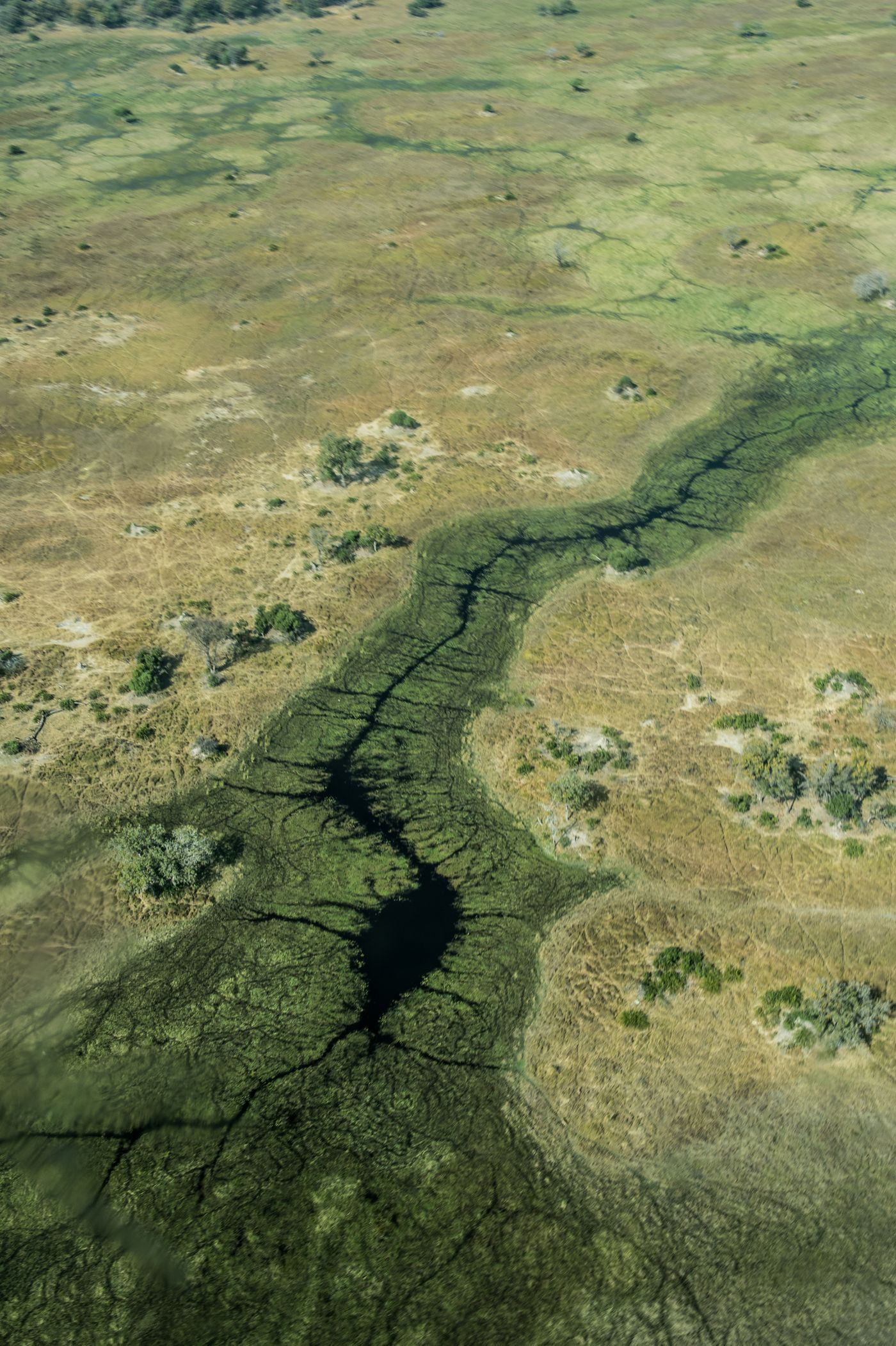
Botswana represents the connoisseur's African safari - low-volume, high-cost, ethically pioneering. The country's tourism policy has deliberately limited bed numbers to preserve wilderness quality, meaning Botswana safaris cost roughly 50-100% more than equivalent Kenya or Tanzania trips. The reward is genuine exclusivity, ethical operating standards, and access to one of the planet's most extraordinary ecosystems: the Okavango Delta, a 15,000 square-kilometre inland river system created when the Okavango River runs inland to die in the Kalahari Desert.
Understanding the Okavango Delta
The Okavango is the world's largest inland delta - a fan-shaped freshwater system fed by rains in the Angolan highlands that travel 1,200 km to deposit their water into the Botswana desert. The annual flood arrives between May and October (when it has not rained in the delta for months), transforming dry channels into permanent water and creating a wildlife paradise. The system supports:
- Elephants - up to 130,000 in Botswana, the world's largest population
- African wild dogs - the second-largest population on the continent
- Lions, leopards, hippos, crocodiles, hyenas
- The unique sitatunga - the swimming antelope
- 500+ bird species
Water Safari vs Land Safari - The Botswana Difference
Many Okavango camps offer both:
- Mokoro (dugout canoe) safaris - quiet pole-propelled glide through water lily channels; eye-level wildlife encounters; the iconic Okavango experience
- Walking safaris with armed guides on the islands
- Game drives on the larger islands and on the periphery of the delta
- Power boat trips on the larger waterways
- Helicopter trips for aerial perspective
The diversity of activities is one of Botswana's distinguishing features. Pre-book Botswana safari transfers and helicopter connections via reputable operators.
The Top Okavango Camps
- Vumbura Plains (Wilderness Safaris) - the gold standard for Okavango luxury
- Mombo Camp (Wilderness Safaris) - on Chief's Island; arguably the best big-cat sightings in southern Africa
- Jao Camp (Wilderness Safaris) - the Bensley-designed pavilions on a private island
- Duba Plains Camp (Great Plains Conservation) - Dereck and Beverly Joubert's flagship; lion-buffalo interactions
- Sandibe Okavango Safari Lodge (&Beyond) - architecturally extraordinary lodge inspired by pangolin
- Belmond Eagle Island Lodge - the only Belmond property in Botswana
- Kwetsani Camp (Wilderness Safaris) - boutique boutique mid-range
- Little Vumbura - boutique 6-suite version of the larger Vumbura
Chobe National Park - The Elephant Capital
Northern Botswana's Chobe National Park hosts the world's largest concentration of elephants - up to 50,000 in the dry season. The Chobe River frontage delivers spectacular boat safaris where you can drift within metres of elephant herds crossing the river. Top stays:
- Chobe Game Lodge - inside the park
- Belmond Savute Elephant Lodge - in the Savute area
- Sanctuary Chobe Chilwero Lodge
- Chobe Bush Lodge - mid-range option
The Kalahari - The Other Botswana
The Kalahari Desert covers most of Botswana and offers a completely different safari experience:
- Central Kalahari Game Reserve - black-maned Kalahari lions, oryx, brown hyena, meerkats
- Makgadikgadi Pans - the world's largest salt pans; meerkat habituated experiences; zebra migration (Nov-Apr)
- Top camps: Jack's Camp, San Camp, Camp Kalahari (the Uncharted Africa Safari Co operations)
The Classic Botswana Itinerary
- Day 1: Fly into Maun; light-aircraft to first Okavango camp
- Days 2-4: Okavango water camp (mokoro safaris, walking, game drives)
- Days 5-7: Okavango land camp (game drives focused on big cats)
- Days 8-9: Chobe / Linyanti (elephant focus)
- Day 10: Fly to Victoria Falls (Zambia/Zimbabwe) for the optional add-on
- Days 11-12: Victoria Falls
Why Botswana Costs More
Botswana's tourism policy deliberately limits volume. Most camps have just 6-12 tents/rooms. Concessions impose strict vehicle and visitor limits. The combination produces premium prices (USD 1,500-3,500 per person per night all-inclusive) but also the lowest visitor density of any major safari country - you genuinely see no other vehicles for hours.
Victoria Falls Combination
The natural Botswana safari add-on is Victoria Falls on the Zambia-Zimbabwe border (90-minute flight from Maun or Kasane). The 1.7-kilometre-wide waterfall is best visited:
- February-May (high water): the most spectacular volume; spray obscures parts of the falls; the Zambian side ("Devil's Pool") closed
- September-December (low water): better visibility; Devil's Pool accessible; smaller cascade
- Top stays: Royal Livingstone Hotel (Zambian side, on the river), Victoria Falls Hotel (Zimbabwe side, historic), Stanley Safari Lodge
Tips & Tricks
- Light-aircraft transfers are essential and not cheap - typically USD 300-500 per person per leg; book through your safari operator
- Luggage limits on light aircraft are strict (15-20kg soft bag); pack accordingly
- Botswana weather: May-September dry winter (5-25°C, cold dawns); October-April wet summer (25-40°C, afternoon storms)
- Malaria prophylaxis recommended year-round in delta areas
- Conservation fees (USD 50-100/day) typically included in lodge rates - check
- Tipping guides USD 25-30/day, mokoro polers USD 15/day, camp staff USD 15-20/day per person
- Cash USD for tips - new clean bills, smaller denominations
- Book 12 months ahead for top camps in peak season
- Combine 2-3 camps for diverse Okavango experiences (water + land + Chobe)