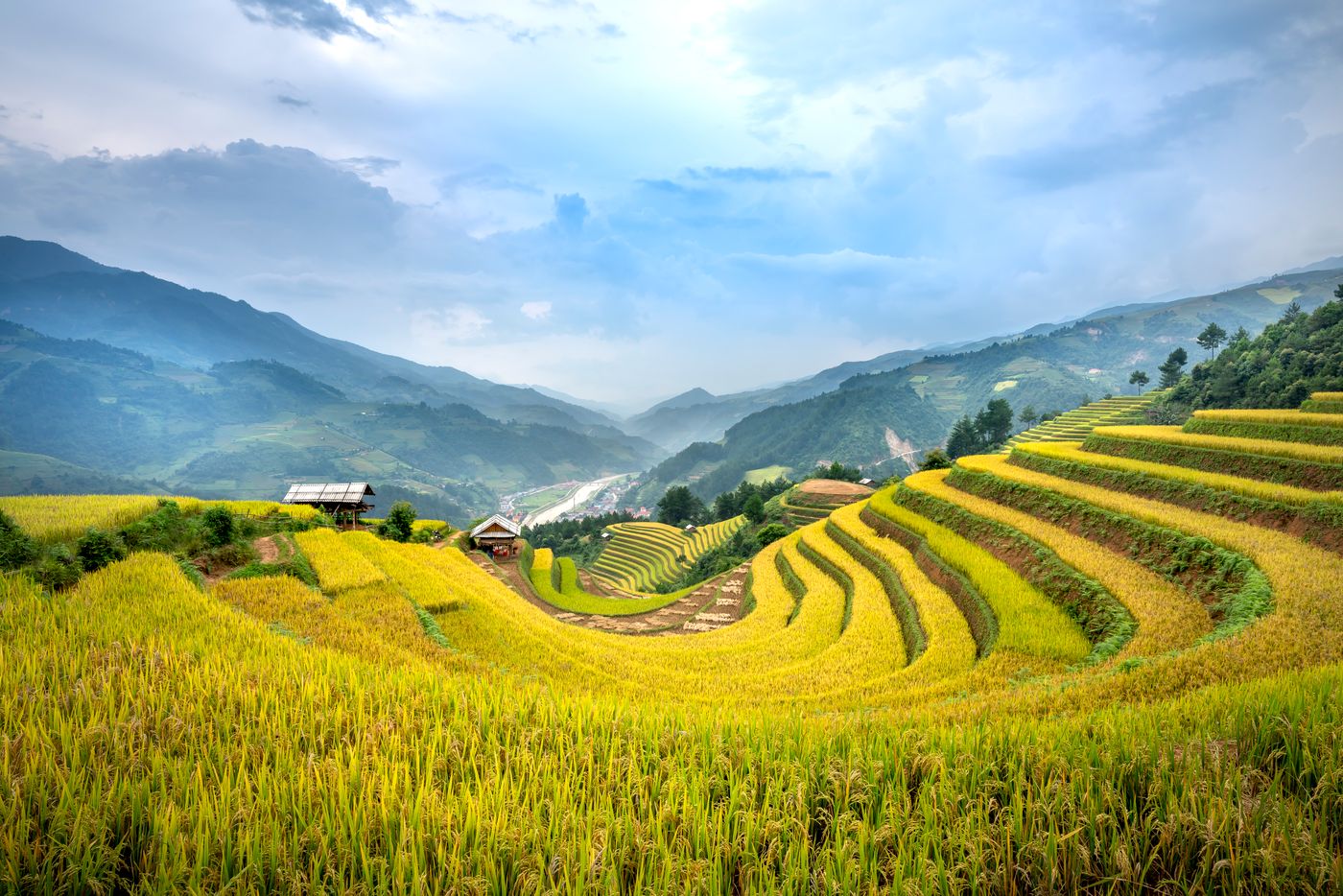
Sa Pa is Vietnam's mountain frontier - a former French hill station 1,600 metres above sea level near the Chinese border, surrounded by some of Asia's most spectacular cascading rice terraces and a tapestry of ethnic-minority villages (Hmong, Dao, Tay, Giay) that maintain remarkably distinct cultures and dress. The town itself is overdeveloped and unattractive; the surrounding valleys are extraordinary. The trick is to spend minimum time in town and maximum time on the trails.
Getting to Sa Pa
- Overnight train Hanoi to Lao Cai (8 hours, soft sleeper recommended) + 1-hour minibus transfer to Sa Pa. The classic and most atmospheric option
- Sleeper bus from Hanoi (6 hours direct to Sa Pa). Cheaper, less comfortable
- Express bus from Hanoi (5.5 hours, daytime) - the most efficient option
- Private car from Hanoi (5 hours, around USD 130 to 180 each way)
Pre-book Hanoi-Sa Pa overnight train sleepers or express buses for guaranteed seats in peak season.
When to Visit
- March to May: spring; rice planting; weather mild and clear
- June to August: the rice paddies turn brilliant green
- September to early October: the rice ripens to golden - the most spectacular and most photographed period
- Mid-October to February: harvest then dry-empty terraces; can be cold (often near freezing in Jan/Feb, occasional snow at the summit)
- Wet season May to September: beautiful but treks become muddy
The Best Treks
- Cat Cat Village (half day, easy) - the most accessible from Sa Pa town; Hmong village with waterfall
- Lao Chai - Ta Van (full day, moderate) - the classic Sa Pa trek through rice terraces to two Hmong and Giay villages
- Ta Phin Village (full day) - Red Dao village famous for herbal bath traditions
- Muong Hoa Valley (full day or multi-day) - the deeper Hmong heartland
- Sin Chai & Y Linh Ho (multi-day with homestay) - the less-trekked routes
- Fansipan Summit (3,143m, the "Roof of Indochina") - 2 to 3 days serious trek, or 15-minute cable car for the easy option
Hiring a Guide - Why It Matters
Self-guided trekking is possible but the routes are unmarked and the cultural context is invaluable. Hire a local Hmong or Dao woman guide from the registered Sa Pa O'Chau social enterprise or via your hotel - they earn proper wages, you receive cultural depth that no map provides, and you avoid the swarm of unlicensed "freelance" sellers in Sa Pa town. Cost: around USD 25 to 40 per day per guide.
Homestays vs Lodges
- Hmong/Dao homestays in Ta Van, Lao Chai or Y Linh Ho - USD 15 to 40 per person including dinner and breakfast; the authentic cultural experience
- Sa Pa town hotels: wide range from USD 30 to 500
- Topas Ecolodge - boutique 33-villa eco-lodge with infinity pool overlooking the valley; the country's most-awarded mountain lodge
- Hotel de la Coupole - MGallery - the most polished hotel in Sa Pa town
- Silk Path Grand Sapa Resort - reliable 5-star with rice-terrace views
- Pao's Sapa Leisure Hotel - boutique mid-range
Fansipan - The Roof of Indochina
At 3,143 metres, Mount Fansipan is the highest peak in mainland Southeast Asia. Two ways up:
- Cable car (since 2016): 15 minutes from Sa Pa town to near the summit, then 600 steps to the peak. The world's longest non-stop three-rope cable car; the experience is spectacular even for non-climbers. Pre-book Fansipan cable car tickets to skip the queues
- Trek (2 to 3 days, demanding): the traditional ascent through high-altitude forest; permits and licensed guide required
The summit is a major Buddhist pilgrimage site with the Fansipan Spiritual Complex of pagodas. Clouds frequently obscure the view; clear-sky days are limited - aim for late October or April.
Markets Worth Visiting
- Sa Pa Sunday Market - the main weekly market in town
- Bac Ha Market (Sunday) - 3 hours from Sa Pa; the most colourful and authentic ethnic-minority market in northern Vietnam
- Can Cau Market (Saturday) - smaller, more authentic Flower Hmong market
- Coc Ly Market (Tuesday) - boat-accessible market
Cultural Etiquette
- Always ask before photographing villagers - particularly older women; some Hmong consider photographs to "steal the soul"
- Buy directly from village women if you want crafts - the value goes home, not to a town middleman
- Do not give candy or money to children - it encourages begging culture that has damaged some villages
- Remove shoes entering Hmong stilt houses
- Bring small gifts for homestay hosts - fresh fruit from Sa Pa town, school supplies, or simply USD 5 to 10 tip
Tips & Tricks
- Pack warm layers - even summer evenings in Sa Pa drop to 10 to 15°C
- Good hiking shoes mandatory - the trails are muddy and steep
- The "freelance guides" in Sa Pa town (mostly children and elderly women) - well-meaning but unregistered. Booking through a hotel or social enterprise ensures fairer wages
- Beyond Sa Pa: extend to Ha Giang Loop (Vietnam's most spectacular motorbike road), Cao Bang (Ban Gioc Waterfalls), or Mai Chau (more accessible mountain valley)
- Wifi works in town; patchy to nonexistent in villages
- Cash is essential - bring sufficient VND for the entire stay; ATMs unreliable