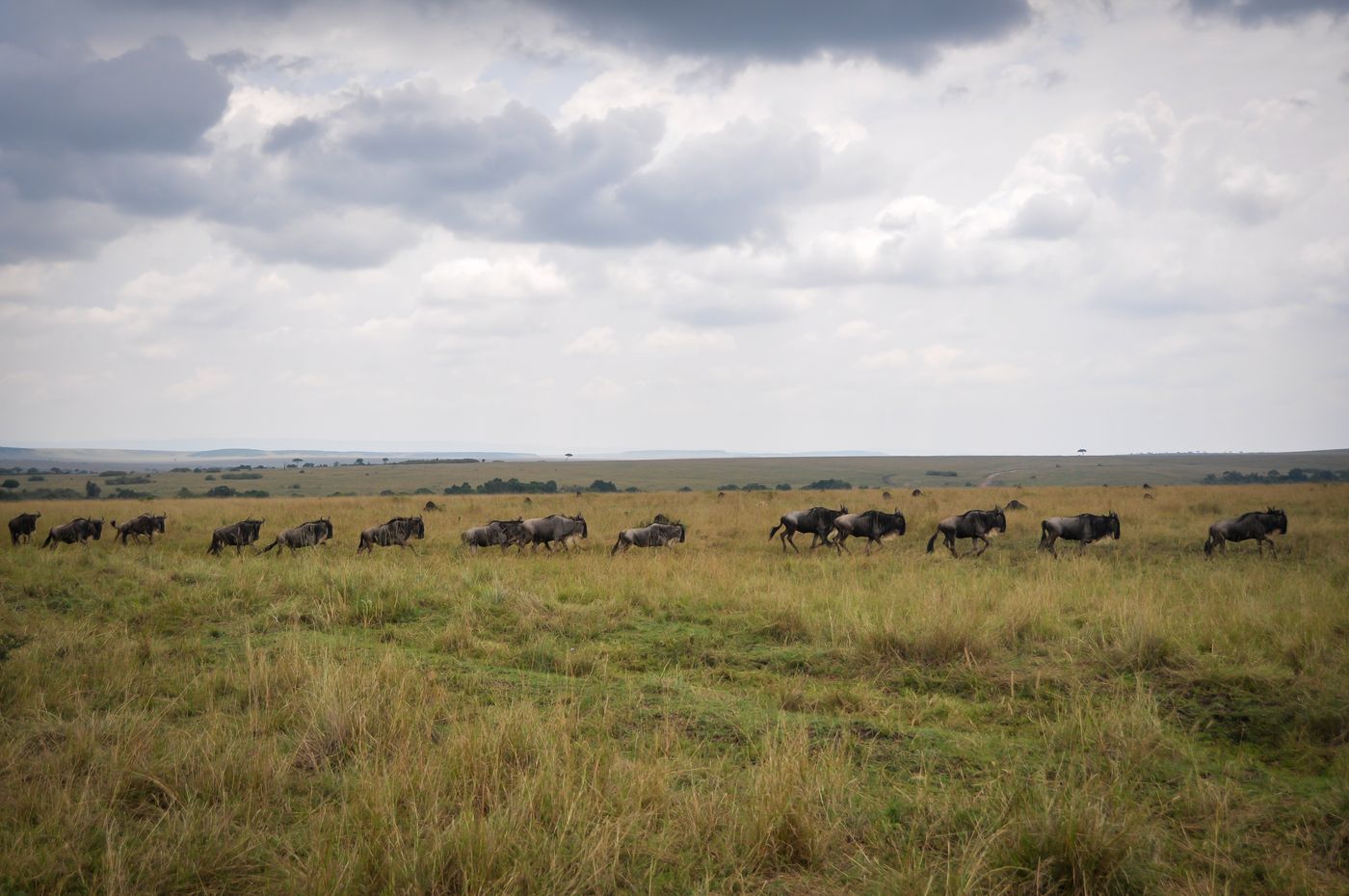
The Great Migration is the largest mammal migration on earth - 1.5 million wildebeest and 500,000 zebra in a perpetual clockwise circuit across the 30,000 square-kilometre Serengeti-Mara ecosystem of Tanzania and Kenya. It is not, as many travellers believe, an event you can "miss" - the migration happens constantly, year-round, somewhere in the ecosystem. The trick to a perfect Migration safari is knowing where the herds will be in your specific travel month, and choosing a camp that follows them.
The Migration Month-by-Month
- January-February: calving season in southern Serengeti (Ndutu region) - 500,000 wildebeest born within 3 weeks; the world's highest concentration of predator activity
- March-April: the herds begin moving west and north; rain often heavy; lower visitor numbers
- May: the columns reach the central Serengeti; rut (mating) season
- June: the herds reach the western corridor; the first Grumeti River crossings (smaller scale than Mara)
- July-August: the famous Mara River crossings between northern Serengeti and Maasai Mara (Kenya); the most-photographed crossings
- September-October: herds disperse across the Maasai Mara grasslands; concentrated predator activity
- November: the return movement south through the eastern Serengeti
- December: herds back in central and southern Serengeti, ready for January calving
The Two Big Decisions: Permanent Camp or Mobile Camp?
The single most important Serengeti decision:
- Permanent lodges (Singita Sabora, Four Seasons Serengeti, Lemala Ewanjan) - fixed in one area; well-built; comfortable; experience the part of Serengeti they sit in
- Mobile tented camps (Asilia Olakira, Sanctuary Kichakani, &Beyond Serengeti Under Canvas) - move 4 to 6 times per year to follow the Migration; tented but high-quality; deliver the migration regardless of season
For Migration-focused safaris, mobile camps are usually the smarter choice. Pre-book Serengeti camps and inter-camp light-aircraft transfers 9-12 months ahead for Migration months.
Top-Rated Serengeti Camps
- Singita Faru Faru, Sabora & Mara River Tented Camp - the gold standard; ultra-luxury
- &Beyond Serengeti Under Canvas - the mobile-camp gold standard; follows the Migration
- Sanctuary Kichakani Serengeti Camp - boutique mobile camp; excellent value-luxury
- Asilia Olakira Camp - the celebrated mobile camp; northern Serengeti
- Lamai Serengeti - permanent boutique camp in the northern Serengeti
- Four Seasons Safari Lodge Serengeti - the largest-scale luxury; family-friendly
- Lemala Ewanjan Tented Camp - central Serengeti permanent camp
- Sayari Camp (Asilia) - northern Serengeti, the closest camp to the Mara River crossings
The River Crossings - What to Expect
The Mara River crossings between July and October are the iconic Migration footage - tens of thousands of wildebeest plunging into crocodile-infested water. The reality:
- Crossings cannot be predicted reliably - sometimes hours of waiting; sometimes nothing happens
- The herds may approach and retreat several times before committing
- The crossings can be brief and chaotic - 20 minutes of intensity then over
- Crocodiles strike - this is genuinely violent wildlife footage
- Vehicle congestion at known crossing points can be substantial during peak season
- Patience pays - 4 to 5 day stays massively increase your odds compared to 2-night quick visits
Beyond the Migration - Year-Round Serengeti Wildlife
Even without the Migration herds, the Serengeti delivers extraordinary year-round wildlife:
- The Big Five (lion, leopard, elephant, buffalo, rhino - the rhino is rare but exists)
- Cheetahs - the Serengeti has the world's highest cheetah density
- African wild dogs - reintroduced; rare but increasingly seen
- The Marsh Lion prides made famous by the BBC's "Big Cat Diary"
- 500+ bird species
- Hippopotamus - the Mara River pools
Ngorongoro Crater - The Essential Add-On
Ngorongoro Crater - the world's largest unbroken caldera, 19 km wide, 600 metres deep, with permanent water sources - hosts an extraordinary year-round concentration of wildlife in a contained area. Often the best chance to see black rhino. Most Serengeti itineraries add 1 to 2 nights at the crater rim. Top lodges: &Beyond Ngorongoro Crater Lodge, The Highlands, Gibb's Farm.
Combining With Zanzibar
The classic 14-day Tanzania itinerary: 8 nights safari (Serengeti + Ngorongoro + perhaps Lake Manyara or Tarangire) + 6 nights Zanzibar beach. Direct light-aircraft transfers from Serengeti airstrips to Zanzibar take 90 minutes. Top Zanzibar luxury: &Beyond Mnemba Island, Park Hyatt Zanzibar, Zuri Zanzibar.
The Sample Itinerary - The Classic Serengeti Trip
- Day 1: Arrive Kilimanjaro Airport; overnight Arusha (transit hotel)
- Days 2-3: Tarangile National Park (elephants and baobabs)
- Days 4-5: Ngorongoro Crater (lodging on crater rim; full-day crater game drive)
- Days 6-8: Central Serengeti (3 nights; full game drives daily)
- Days 9-10: Northern Serengeti during crossing season, or southern during calving season
- Day 11: Fly to Zanzibar; beach extension
- Days 12-14: Beach
- Day 15: Depart Zanzibar International
Tips & Tricks
- Book 9-12 months ahead for Migration peak months
- Inter-camp light aircraft transfers are essential - the distances are prohibitive by road; book through your lodge company
- Always carry a small daypack on game drives - water, snacks, layers, binoculars
- Trust your guide on crossing predictions - the experienced ones read herd behaviour
- Patience at known crossing sites - sometimes 2-3 hours of waiting before the herd commits
- Conservation fees are added at every park (USD 60-80/day) - check whether your quoted rate includes these
- Tip guides USD 20-25/day per person; mobile camp staff collectively USD 15/day per person
- Pack truly neutral colours - tsetse flies in some areas are vicious; black and blue clothing attract them