
South Africa is one of the world's great travel destinations, and it has a serious crime problem. Both statements are true, and an honest safety guide has to start there. The UK Foreign Office describes a high crime rate, including violent crime, and South Africans themselves talk about it constantly. Yet the overwhelming majority of visitors have trips that are memorable for wine, wildlife and mountains rather than for anything going wrong.
The gap between those facts is explained by where crime happens and how locals manage it. Most violent crime takes place in townships, informal settlements and high-density areas, and risk rises after dark. Visitors spend most of their time in wine estates, national parks, guesthouses and well-run city districts, and they can borrow the habits South Africans use every day. This guide sets out those habits.
We keep live alerts, protests and service disruption out of this evergreen guide. Read the current UK Foreign Office advice before you go and check TripMag Travel News for anything changing quickly.
The golden rules
- Respect the dark. Plan to be where you are spending the night before sunset, especially when driving. Use a car or ride-hailing app at night, even for short distances.
- Look unremarkable. Leave expensive jewellery and watches at home, keep cameras and phones out of sight when not in use, and do not count cash in public.
- Use your accommodation's local knowledge. Hosts know which streets are fine to walk, which beach car park to avoid and which restaurant is better reached by car. Ask them.
- Hand over, do not argue. If you are ever confronted by a robber, give them what they want. Official advice is not to resist, because resistance can turn a theft into violence.

Cities: how to move around
In Cape Town, most visitors base themselves in the City Bowl, the V&A Waterfront, Green Point, Sea Point or the Atlantic Seaboard. These areas are busy and well policed by day, and the Waterfront is lively into the evening. In Johannesburg, visitors tend to stay in northern suburbs such as Rosebank, Sandton and Melrose, or in areas like Maboneng with good local guidance. Central business districts can empty out fast at the end of the working day, and that is when they become less safe.
For getting around:
- Ride-hailing apps are the easiest option. Book in the app, wait somewhere safe rather than on the street, and check the registration plate and driver's name before you get in. Be wary of drivers at airports who claim to be from an app but approach you directly.
- The Gautrain, which links O.R. Tambo airport, Sandton and Pretoria, and MyCiTi buses in central Cape Town and along the Atlantic Seaboard are recommended by official advice. Do not walk to or from Gautrain stations after dark.
- Minibus taxis, the shared vans that most South Africans use, are minimally regulated and have higher risks of accidents and theft. Visitors should avoid them.
To visit a township, go with a reputable local guide. Township tours run by people from the community are a valuable way to understand the country, and the guide's presence matters.
Driving: the hazards and the habits
A hire car is the best way to see much of South Africa, and the roads between major towns are generally good. Fatal crashes are common, though, especially on weekends and public holidays, and driving habits take some getting used to. On highways, slower drivers often move onto the hard shoulder to let you pass, and a quick flash of the hazard lights is the local way to say thank you. At four-way stops, the first car to arrive goes first.
Crime-related habits matter as much as road skills:
- Keep doors locked and windows up in towns, and put bags in the boot before you set off, not in the car park.
- At traffic lights, leave space to pull away from the car in front. Smash-and-grab thieves target cars with valuables visible on the seat.
- Stick to main roads, and do not let a navigation app route you through unfamiliar residential areas to save a few minutes.
- Avoid driving at night, both because of crime and because of unlit roads, pedestrians and animals.
- Do not pick up hitchhikers or stop for apparently stranded motorists. Report them to the police instead.
- Keep the fuel tank above half full in rural areas.
When arriving at O.R. Tambo in Johannesburg, arrange a transfer through your hotel or tour operator, or use the Gautrain. Criminals have followed travellers from the airport and robbed them at their destination, so stay alert as you arrive and use main roads.
Money and ATMs
Cards and contactless payments work almost everywhere, so you rarely need much cash. When you do, use ATMs inside banks or shopping centres during the day. Cover your PIN, decline all offers of help, and if your card gets stuck, cancel it from your phone before you leave the machine. Change large amounts of money only at banks or secure malls.
Hiking Table Mountain and the Cape trails
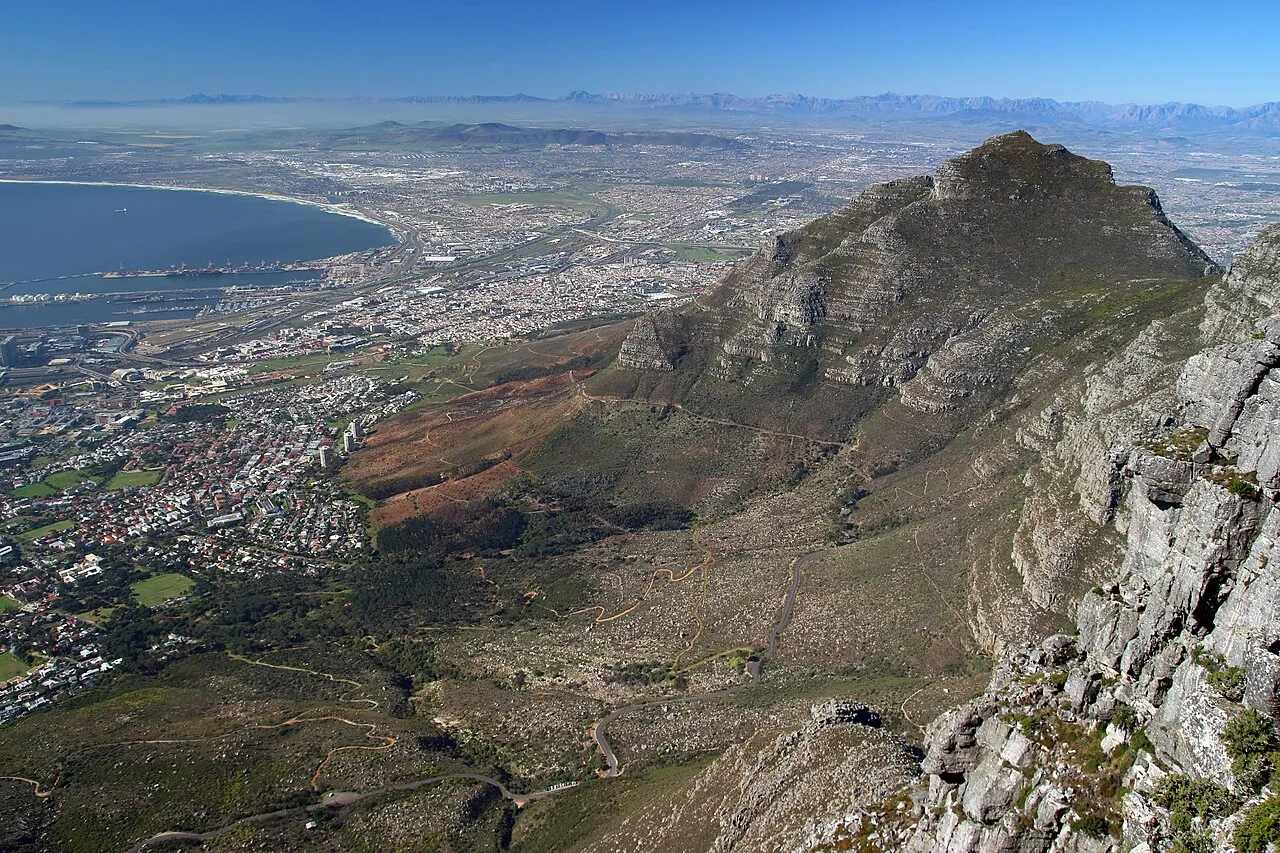
Table Mountain is one of the best city hikes on earth, and it deserves respect for two reasons: weather and crime. Cloud, the famous tablecloth, can roll in fast and hide the paths, and the summit can be cold and windy even on a hot day. Muggings have also happened on quieter trails.
- Hike in a group of four or more, and stick to busy, marked routes such as Platteklip Gorge or India Venster with a guide.
- Start early to avoid the midday heat and finish well before dark.
- Check the cableway's status before relying on it to get down; it closes in high wind.
- Carry water, a warm layer and a charged phone. Save the Wilderness Search and Rescue number in your contacts.
Lion's Head is popular at sunrise and sunset, but come down with the crowd rather than alone after dark. For longer hikes in the Cape Point reserve or the Cederberg, go with a guide or a hiking club.
Beaches and the ocean
The ocean is a bigger risk than sharks. Strong currents and rip tides cause many drownings each year. On busy beaches, swim only between the red and yellow flags, where lifeguards are watching. On unpatrolled beaches, ask locals about conditions, and if in doubt, stay out of the water. Wear a life jacket for any water sport.
Cape Town has a well-known Shark Spotters programme at popular False Bay beaches such as Muizenberg and Fish Hoek. Spotters watch from the mountainside and fly coloured flags to show visibility and whether a shark has been seen. If the siren sounds, get out of the water. Seals are a more common surprise: they can bite, and rabies has been found in seals on the Cape Peninsula, so keep your distance.
Do not leave belongings unattended on the sand, and avoid quiet, deserted beaches, especially towards evening.
Safari and wildlife safety
National parks are among the safest places in the country from a crime point of view. The risks are wildlife and rules. In Kruger and other self-drive parks, stay in your vehicle except at designated areas, never feed animals, and respect the gate times: camps lock their gates at dusk and opening and closing times change through the year. Getting caught outside after closing is fined, and dangerous.
On guided drives and walks, follow your ranger's instructions exactly. In tented camps, do not walk alone at night if staff offer an escort; that offer exists for good reasons. Kruger and the north-east are malaria areas, with higher risk in the wet summer months, so take advice from a travel clinic before you go.
Health and practical points
- Tap water is generally safe to drink in the main cities and towns. In rural areas, ask locally.
- Private hospitals are of a high standard and expensive; comprehensive travel insurance is essential.
- The sun is strong all year, and at Johannesburg's altitude you burn faster than you expect, even on a cool winter day.
- Personal use of cannabis in private is legal, but other drugs are illegal, and penalties for drug smuggling are severe.
- Carry a copy of your passport photo page and keep the original in the hotel safe unless you need it.
Travelling as a woman
Many women travel solo in South Africa, and the experience is usually warm and sociable. Official advice is frank that sexual violence is a serious problem in the country, which is why the general rules above matter even more. Use ride-hailing apps or pre-booked drivers at night rather than walking, share your live location with someone when you travel between towns, and choose accommodation with good reviews from other solo women. Guided tours and small-group hikes are an easy way to explore remote areas with company. In bars and clubs, keep an eye on your drink, as you would anywhere.
Scams worth knowing
- ATM helpers. A friendly stranger offers to help when your card seems stuck, then watches your PIN or swaps your card. Decline all help at ATMs.
- Fake app drivers. Someone approaches you at the airport claiming to be your ride-hailing driver. Only get into the car whose plate and driver match your app.
- Fake police. An unmarked car with blue lights signals you to stop on a quiet road. Slow down, put your hazard lights on and drive to a police station or busy, lit place before stopping.
- Ticket and tour touts. At busy attractions, buy tickets from official desks or websites rather than from people in the car park.
- Card skimming. In restaurants, pay with the card machine at the table rather than letting your card leave your sight.
LGBT+ travellers
South Africa has some of the strongest legal protections in the world. Same-sex relationships are legal, same-sex marriage has been legal since 2006, and discrimination based on sexual orientation is unconstitutional. Cape Town in particular has a lively LGBT+ scene. Attitudes in conservative rural areas can be different, so use the same judgement you would anywhere.
Emergency numbers
- 10111: police
- 10177: ambulance
- 112: emergency services from any mobile phone
- NSRI sea rescue and Wilderness Search and Rescue: save the numbers from the official advice before you hike or go out on the water
The bottom line
South Africa is not a place to switch off completely, and it does not need to be a place you worry about. Plan your days around daylight, drive and park sensibly, hike in company, swim between the flags and lean on local advice. Thousands of visitors a day do exactly that and come home talking about penguins, Pinotage and leopards, not crime.
For the rest of your planning, the South Africa travel guide is the place to start. Choose safe, convenient bases with where to stay in South Africa, compare routes in getting around South Africa, and pick your season with the best time to visit. More guides are on the South Africa hub.