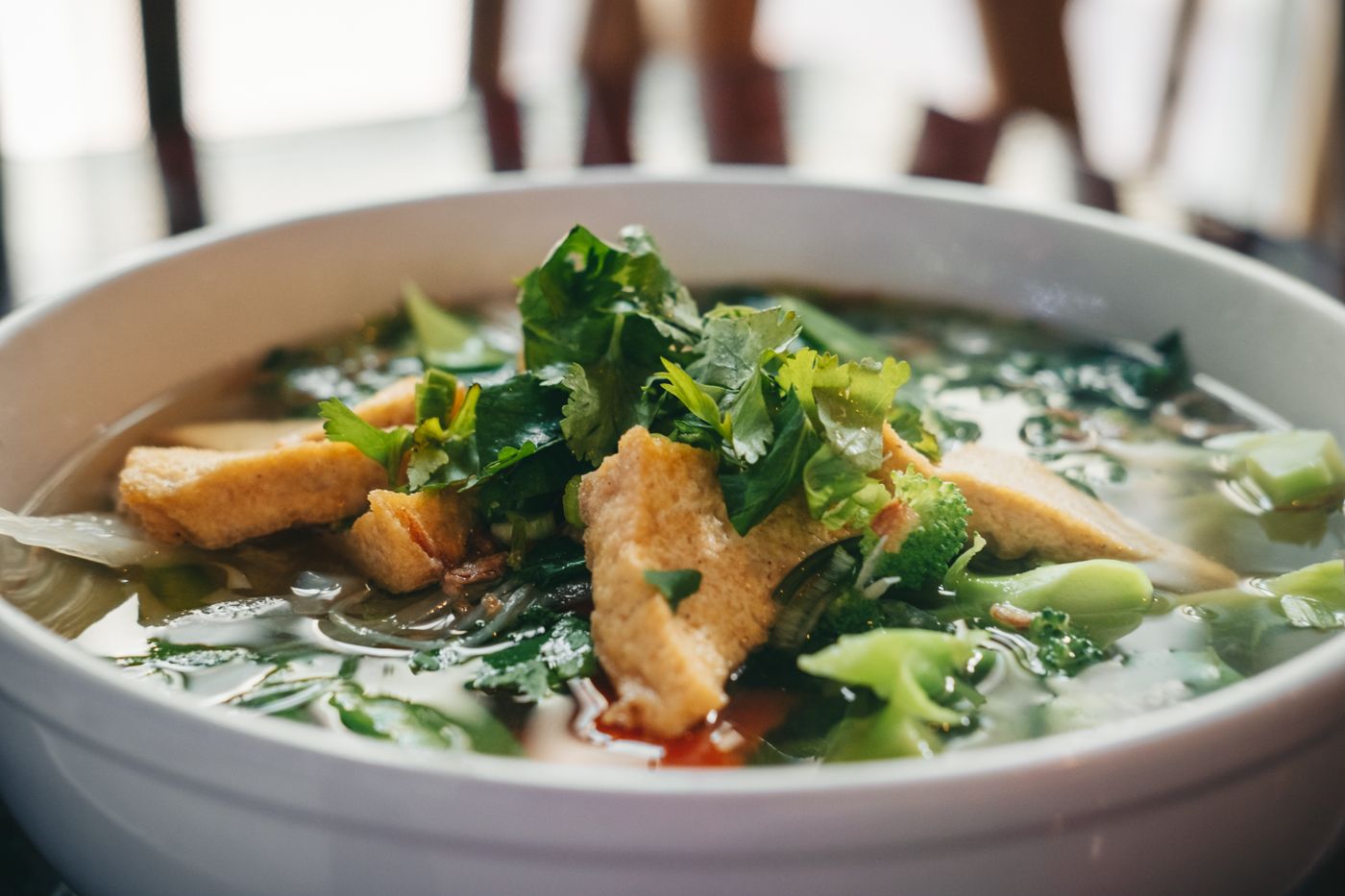
Vietnamese food is consistently ranked among the world's healthiest and most balanced cuisines - light, herb-driven, low in fat, anchored by the magic alchemy of fish sauce, lime, chili and fresh leaves. Three distinct regional cuisines (north, central, south) developed over 1,000 years of geography and history. Knowing what to eat where is the difference between a good food trip and a transcendent one.
The North - Hanoi & Surroundings
Northern Vietnamese food is subtler, less spicy, and more delicate than the centre or south:
- Pho - the legendary beef noodle soup originated in Hanoi; cleaner broth than southern versions
- Bun Cha - grilled pork patties in fish sauce broth with rice noodles and herbs
- Cha Ca - turmeric grilled fish with dill, at the historic Cha Ca La Vong (since 1871)
- Banh Cuon - silky steamed rice rolls filled with pork and mushroom
- Bun Thang - the elegant 12-ingredient chicken noodle soup
- Egg Coffee (Ca Phe Trung) - invented at Cafe Giang in 1946
The Centre - Hue & Hoi An
Central Vietnamese food is spicier, more royal-tradition-influenced (Hue was the imperial capital), and includes some of Vietnam's most regional-specific dishes:
- Bun Bo Hue - the legendary spicy beef noodle soup of Hue
- Cao Lau - thick noodles, pork and crackers; only authentic in Hoi An due to specific well water
- White Rose Dumplings (Banh Bao Vac) - the Hoi An rice-paper-dumpling icon
- Banh Xeo - the crispy yellow rice-flour crepe filled with shrimp and bean sprouts
- Mi Quang - turmeric noodles with shrimp and pork
- Hue Banh Khoai - smaller, denser version of banh xeo
Pre-book Hoi An and Hue cooking classes for hands-on learning of these regional dishes.
The South - Saigon & Mekong
Southern Vietnamese cuisine is sweeter, more abundant, and more influenced by Khmer and Chinese traditions:
- Banh Mi - the French baguette sandwich; Saigon versions are the original
- Com Tam - broken rice with grilled pork chop, egg, and fish sauce; the Saigon working-day lunch
- Hu Tieu - clear pork-bone noodle soup, less famous than pho but equally beloved
- Banh Khot - tiny coconut-rice cups with shrimp
- Goi Cuon (Fresh Spring Rolls) - the rice-paper-wrapped fresh herbs and shrimp
- Che (sweet soups) - the Vietnamese dessert tradition; chè ba màu (three-colour) is the icon
The Must-Visit Restaurants by City
Hanoi
- Pho Gia Truyen (49 Bat Dan) - the legendary morning pho queue
- Bun Cha Huong Lien - where Obama and Bourdain ate
- Banh Mi 25 - the Old Quarter banh mi institution
- Cha Ca La Vong - the original turmeric-fish restaurant since 1871
- Cafe Giang - the inventor of egg coffee
- Bia Hoi Junction (Ta Hien Street) - the legendary plastic-stools beer corner
Hoi An
- Madam Khanh - The Banh Mi Queen - cult-favourite banh mi
- Mr Tho Cao Lau - the most authentic cao lau in town
- Morning Glory - chef Ms Vy's classic Hoi An restaurant
- Streets Restaurant Cafe - the social enterprise training street kids
- Bale Well - the locals' BBQ pork institution
Saigon
- Banh Mi Huynh Hoa - the legendary banh mi shop on Le Thi Rieng
- Anan Saigon - the Michelin-starred Vietnamese fine dining
- Cuc Gach Quan - the country's most beloved restaurant
- Pho Quynh - 24-hour pho institution
- Quan Bui - upmarket Vietnamese restaurant chain
Coffee Culture
Vietnam is the world's second-largest coffee producer, with a coffee culture rivalled only by Italy and Ethiopia:
- Ca Phe Sua Da - iced milk coffee with condensed milk; the universal Vietnamese coffee
- Ca Phe Trung (Egg Coffee) - Hanoi specialty
- Coconut Coffee - Hoi An specialty
- Salt Coffee - Hue specialty
- Specialty third-wave scene - The Workshop (Saigon), Tranquil Cafe (Hanoi), Phin Coffee Roasters
Cooking Classes Worth Doing
- Red Bridge Cooking School (Hoi An) - the polished classic
- Morning Glory Cooking School (Hoi An) - by chef Ms Vy
- Hanoi Cooking Centre - the best in the capital
- Tra Que Vegetable Village (Hoi An) - hands-on farming and cooking
- Saigon Cooking Class at Hoa Tuc - elegant urban experience
Tips & Tricks
- Eat where the locals eat - busy small restaurants with plastic stools and high turnover
- Watch out for fake banh mi shops targeting tourists; the real ones have queues of locals
- Drink Vietnamese coffee in moderation - it is dramatically stronger than Western coffee
- The herbs and leaves on the table are not garnish - they are integral to each dish; eat them
- Fish sauce is the secret - learn to use it in dipping sauces (with lime, chili, sugar)
- Tap water unsafe - but ice in established restaurants is generally filtered
- Tipping not traditionally Vietnamese but appreciated; round up bills
- Pre-book guided street-food tours - the best way to safely experience Vietnamese food culture