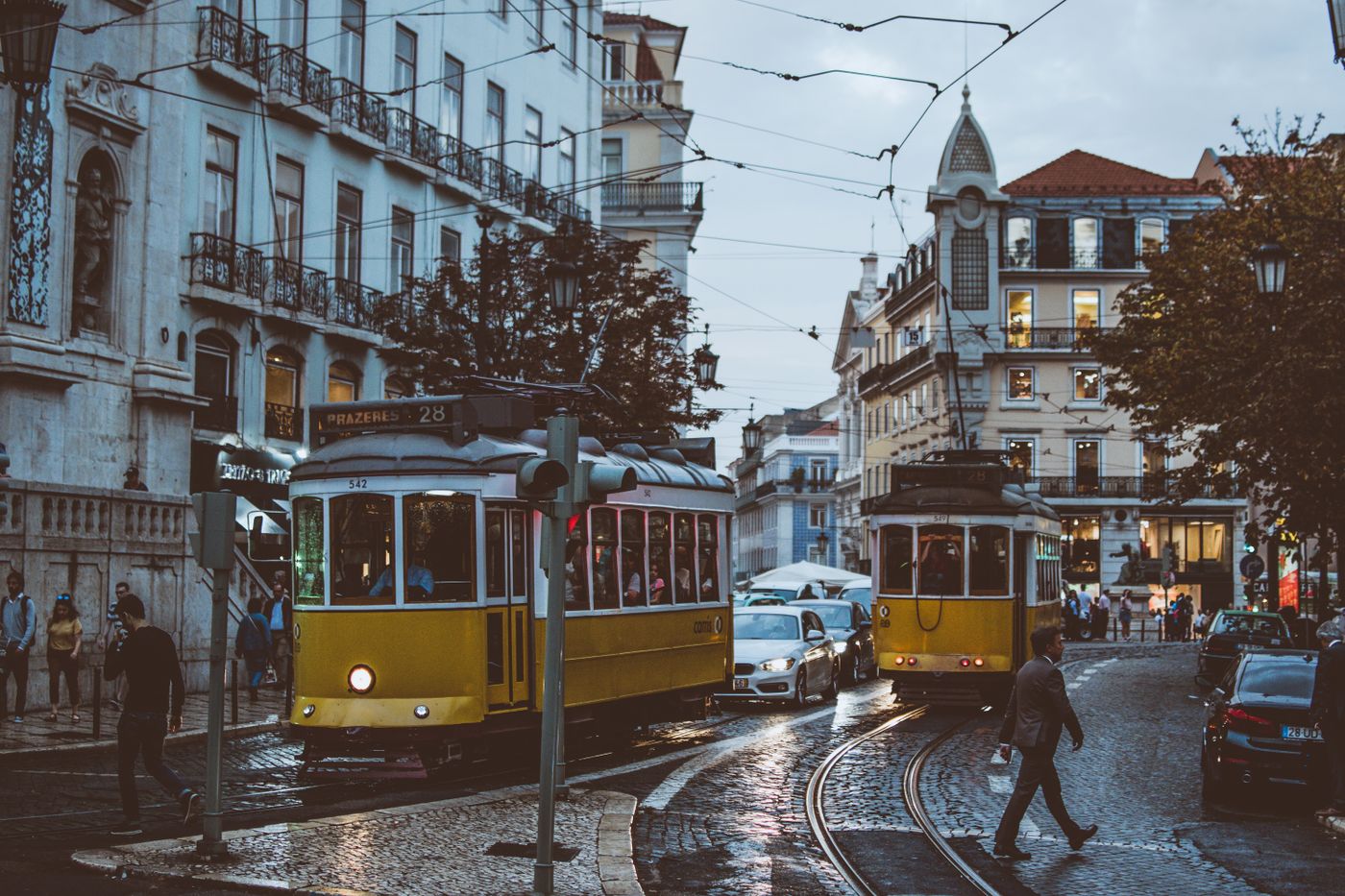
Lisbon requires a reorientation. The city spreads across seven hills descending to the Tagus estuary, which means that the streets you plan to walk in sequence on a map turn out to be separated by climbs that would be unremarkable if they weren't dressed in cobblestones and Art Nouveau tiles. This is not a criticism — it is the texture of the city. Lisbon's hills are what give it its neighbourhood character, its viewpoints (miradouros), its tram network built for terrain nothing else could navigate, and the pockets of solitude that survive even as tourism has transformed the old districts.
Where to Stay
Chiado is the most central and convenient base — good restaurants, walkable to Alfama and Belém, excellent for independent shops. Bairro Alto Hotel on Praça Luís de Camões is Lisbon's finest — rooftop bar, exceptional service, beautiful building. Memmo Alfama has the best Tagus views and terrace. The Lumiares in Bairro Alto is a good boutique option. Mid-range: Lisbon Story Guesthouse, Casa do Príncipe. Book Lisbon Sintra tours, tuk-tuk experiences & transfers.
The Essential Lisbon
- Alfama — the oldest neighbourhood, Moorish in origin, a hillside of whitewashed houses and fado restaurants. Walk up to the Castelo de São Jorge for the city view. Best explored in the morning before tour groups arrive
- Belém — 6 km west along the Tagus; the Jerónimos Monastery (Manueline Gothic; UNESCO World Heritage Site) and the Pastéis de Belém bakery (the original custard tart, made here since 1837) are the twin justifications
- LX Factory — the converted 19th-century industrial complex in Alcântara; the Sunday market is the best in Lisbon
- Miradouro da Graça — the least-crowded of Lisbon's major viewpoints; the best city panorama at sunset
- Museu Nacional do Azulejo — the tile museum in a former convent; the history of Portuguese decorative tiles from the 15th century; genuinely excellent
Food & Eating
- Time Out Market (Mercado da Ribeira) — the original; dozens of the city's best chefs in one market hall; excellent for quick meals
- Solar dos Presuntos (Rossio) — traditional Portuguese; the best place for caldo verde, bacalhau and roast suckling pig
- Taberna da Rua das Flores (Chiado) — small, no reservations, small plates of exceptional quality; arrive before 7:30pm or queue
- Cervejaria Ramiro (Intendente) — the legendary seafood restaurant; the percebes (barnacles) and gambas are unmissable
- Pastéis de nata: Pastéis de Belém for the original; Manteigaria in Chiado for the best in the centre
Day Trips
Sintra (40 minutes by train from Rossio station) is the essential day trip — a UNESCO cultural landscape of 19th-century Romanticist palaces and castles in forested hills above the Tagus mouth. Pena Palace (the colourful hilltop Romantic confection) and Moorish Castle are the highlights; Quinta da Regaleira (mystical private estate with an initiatic well) is the most unusual. Book Sintra tickets online — queues are long in summer. Cascais (40 minutes) is the alternative — a seaside resort with good beaches, excellent restaurants and a relaxed pace. Book Sintra and Cascais day tours from Lisbon.
Tips Most Guides Miss
- Tram 28 is permanently overcrowded with tourists — it is not worth the wait; walk the Alfama hills instead
- Lisbon's hills face west — the evening light on the white buildings is extraordinary; the best photographs are in the two hours before sunset
- October is the best month — warm sea (still 20°C), manageable crowds, lower hotel rates, and the produce markets at their peak
- Portuguese wine outside the Douro (Alentejo, Dão, Vinho Verde) is excellent and inexpensive; order the house wine and you will rarely be wrong
- Lisbon's public transport (Metro and buses) is excellent and cheap; an all-day card is far better value than taxis