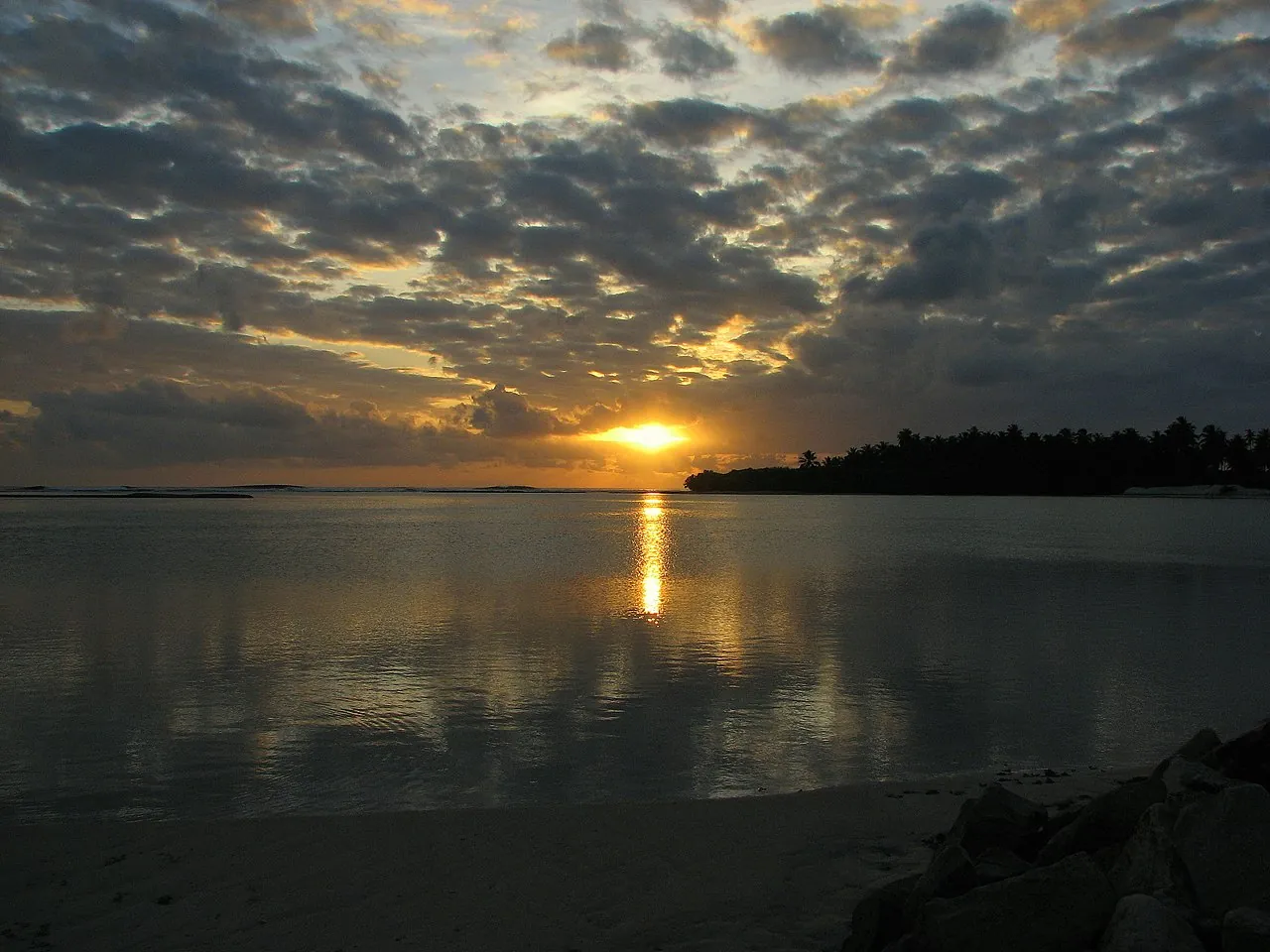

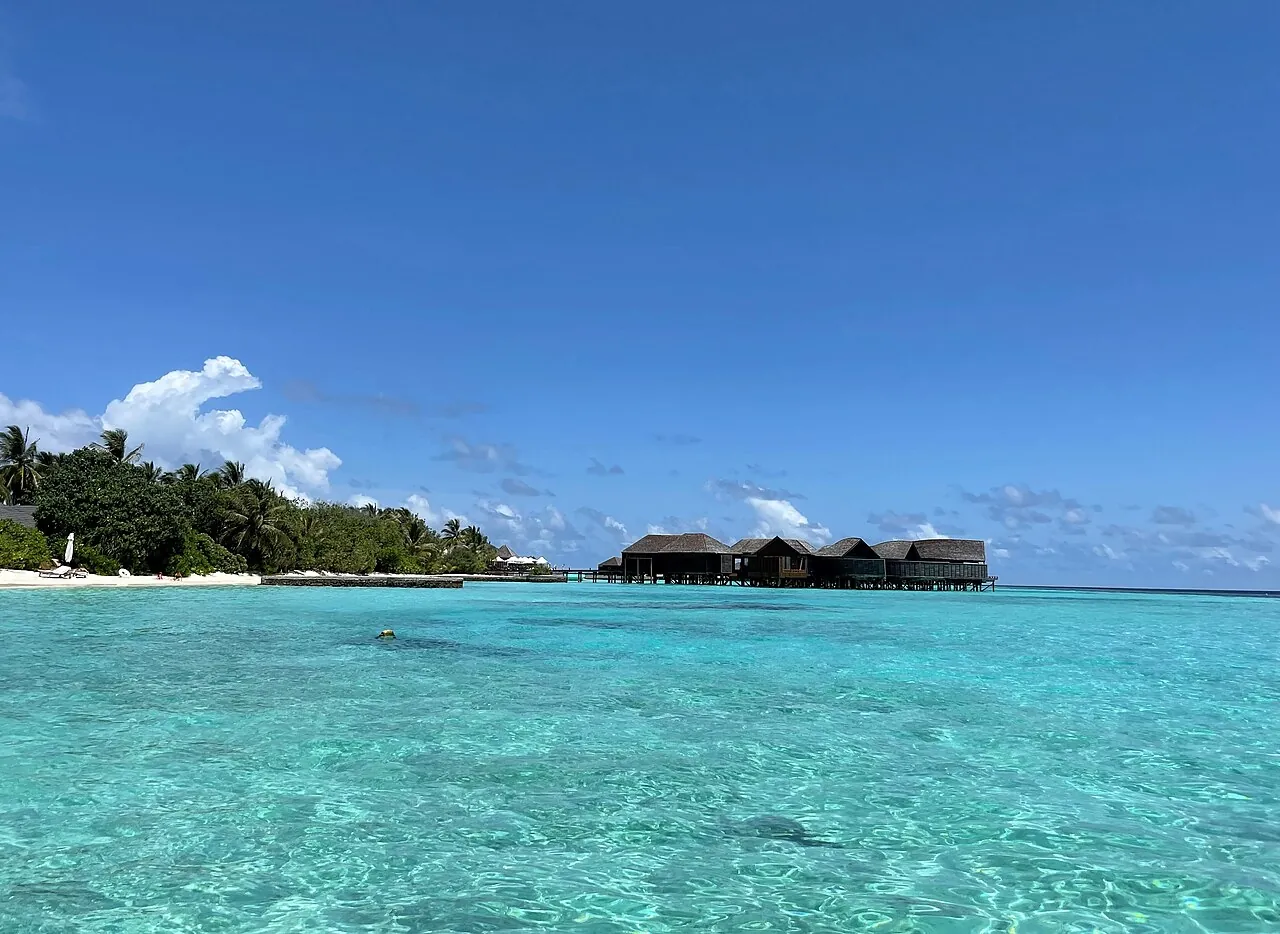
For a long time, the Maldives meant one thing: a private resort island, an overwater villa and a bill to match. That version still exists, and at the top end it is one of the most expensive holidays in the world. But since the country opened its inhabited islands to tourism in 2009, a second Maldives has grown up alongside it. Guesthouses on local islands such as Maafushi, Dhigurah, Thoddoo and Fulidhoo offer the same turquoise water and reefs at a fraction of the cost, with public ferries, fish curry in local cafés and day trips to sandbanks. The difference between the two can be tenfold.
This guide explains what really moves the budget. It avoids exact prices that date quickly and focuses on the patterns that hold.
The five decisions that shape the budget
- Resort or local island: the single biggest choice, affecting accommodation, food, drink and transport.
- How you reach your island: public ferry, speedboat, domestic flight or seaplane.
- Meal plan: at resorts, half board, full board or all-inclusive changes the bill dramatically.
- Alcohol: available only at resorts and on safari boats, and priced accordingly.
- Excursions and diving: snorkelling trips, whale shark and manta tours, and dive packages.
Money: rufiyaa and dollars
The local currency is the Maldivian rufiyaa (MVR). Resorts price almost everything in US dollars and charge to your room, settled by card at the end of the stay. On local islands, guesthouses and dive centres usually quote in dollars too, but cafés, shops and ferries are paid in rufiyaa. Clean, undamaged US dollar notes are widely accepted, and change is often given in rufiyaa. ATMs are found in Malé, Hulhumalé and some larger local islands, but many smaller islands have none, so bring enough cash for your stay.
Getting there
Velana International Airport is on Hulhulé Island, next to the capital, Malé, and connected to it by the Sinamalé Bridge. Most travellers from Europe connect through the Gulf, Istanbul, India or Sri Lanka, and some airlines fly direct. Fares are highest at Christmas, New Year and Easter, and during the European winter, when the Maldives is in its peak dry season. The departure tax, which has risen in recent years, is usually included in the ticket price.
Transfers: the hidden big cost
Transfers from the airport to your island are one of the largest costs, and they are often not included in the room price.
- Seaplanes: the most scenic option, used by resorts in more distant atolls. They fly only in daylight and are very expensive per person.
- Domestic flights: link Velana with airports across the country, often followed by a speedboat. They are cheaper than seaplanes for distant atolls.
- Speedboats: used for resorts and local islands in North and South Malé Atolls, and in parts of Ari Atoll. Shared speedboats to local islands are moderately priced.
- Public ferries: run by the state company MTCC, they are by far the cheapest way to reach local islands, but they are slow, run on fixed timetables and do not operate on Fridays.
When comparing resorts, check the transfer cost for every person, including children. A cheaper resort in a remote atoll can end up costing more than a pricier one close to the airport. Our guide to getting around the Maldives explains the options in detail.
Accommodation: resorts, guesthouses and liveaboards
- Luxury resorts occupy their own islands, with overwater villas, private pools and house reefs. Prices are among the highest in the world, especially at Christmas and New Year.
- Mid-range resorts exist, particularly in South Malé and Ari Atolls, and are often good value on all-inclusive packages.
- Guesthouses on local islands are small, simple and friendly, often run by Maldivian families. Breakfast is usually included, and the price is a fraction of a resort.
- Liveaboards, or safari boats, combine accommodation with diving or surfing across several atolls, and can be good value for keen divers.
A popular approach is to split the trip: a few nights in a guesthouse to explore local life and reefs cheaply, followed by a few nights in a resort. Read our guide to where to stay in the Maldives to compare the options.
Food and drink
At resorts, food is imported, prepared to international standards and priced accordingly. A meal plan is usually cheaper than paying à la carte, and all-inclusive packages make sense if you drink. Check what each package includes, as some exclude premium drinks, excursions or certain restaurants.
On local islands, eating is much cheaper. Small cafés and guesthouses serve Maldivian dishes such as mas huni, a breakfast of tuna, coconut, onion and chilli eaten with flatbread; garudhiya, a clear fish broth served with rice, lime and chilli; and fish curries. In the afternoon, cafés lay out hedhikaa, a spread of savoury short eats such as fish cakes and samosas, with sweet tea. Fresh tuna and reef fish are the stars of the menu.
Alcohol is not available on local islands, where it is illegal outside licensed premises. Some local-island guesthouses arrange trips to nearby resorts or to licensed floating bars anchored offshore. At resorts, alcohol is expensive and is often the biggest item on the final bill.
Taxes and service charges
Taxes add a significant amount to every bill in the Maldives, and many advertised prices exclude them:
- Tourism goods and services tax (TGST): charged on accommodation, food and most tourist services, at 17 percent at the time of writing.
- Service charge: usually 10 percent, added in resorts, guesthouses and restaurants.
- Green tax: charged per person per night, and higher at resorts than at small guesthouses. It was increased in 2025.
Together, these can add a third or more to the base price. Always check whether quotes include taxes and fees. Tipping is not compulsory because of the service charge, but leaving something for staff who have looked after you is common, especially in resorts.
Excursions, snorkelling and diving
The Maldives is one of the best places in the world to see marine life, and some of the most memorable experiences are relatively affordable:
- House reefs: many resorts have a reef just off the beach, which you can snorkel for free.
- Snorkelling trips: guesthouses on local islands run inexpensive trips to reefs, sandbanks and spots where turtles and rays are common.
- Whale sharks: the South Ari Marine Protected Area is known for whale shark sightings all year. Trips from Dhigurah and nearby islands are much cheaper than from resorts.
- Manta rays: Hanifaru Bay in Baa Atoll, a UNESCO biosphere reserve, is famous for gatherings of mantas, mainly between June and November. Access is regulated and a fee applies.
- Diving: available on resorts, local islands and liveaboards. Packages for several dives are cheaper than paying per dive.
Booking excursions through a local-island guesthouse or dive centre is usually far cheaper than booking through a resort.
Local islands: what to expect
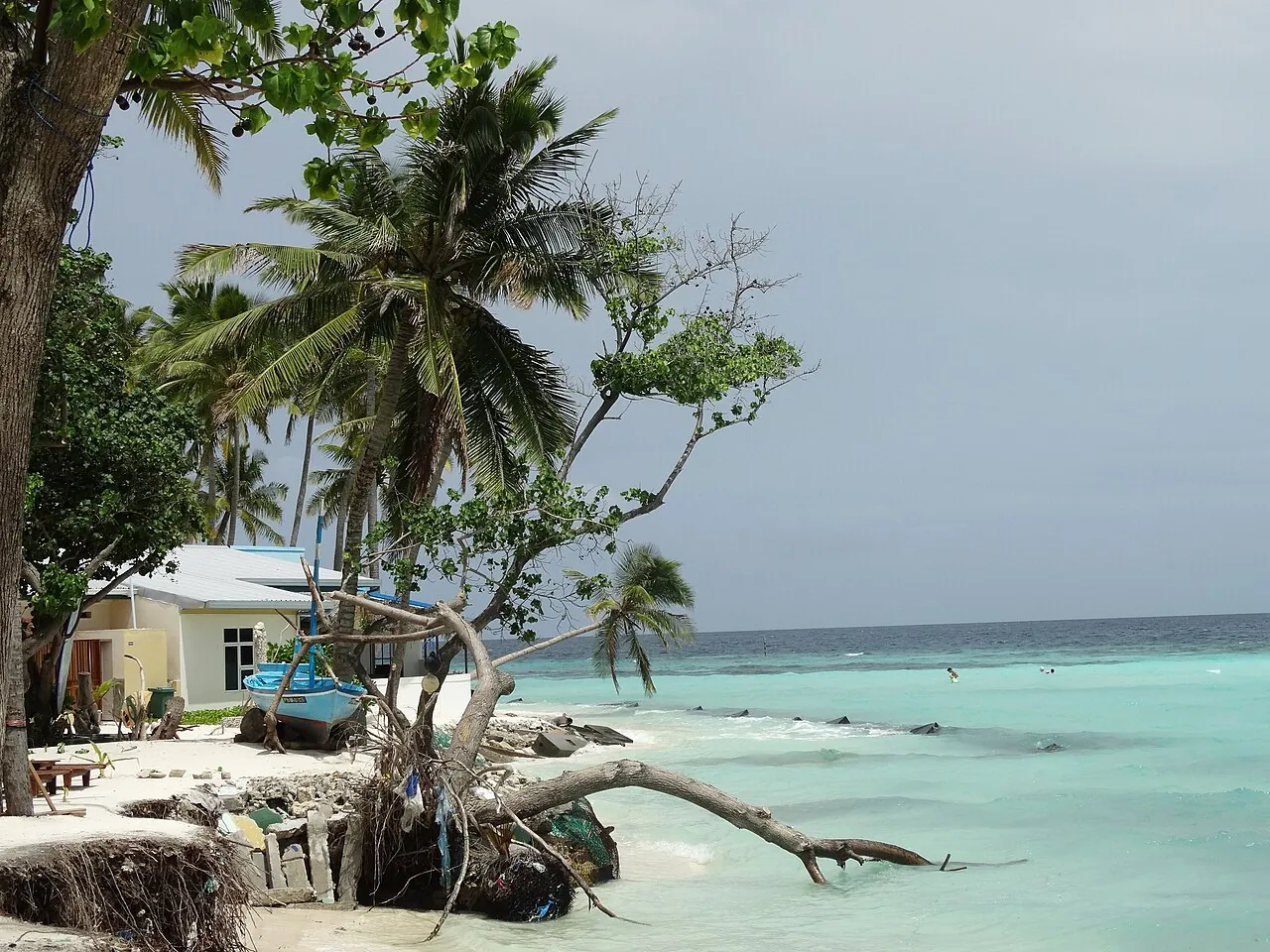
Staying on a local island means living alongside Maldivian communities, under their rules. Alcohol is banned, and visitors should dress modestly in the village, with shoulders and knees covered. Swimming in a bikini is allowed only on designated tourist beaches, often called bikini beaches. Friday is the main day of prayer, and many businesses close for part of the day. In return, you get warm hospitality, local food, football on the beach at sunset and prices far below those of the resorts.
Popular local islands include Maafushi and Guraidhoo in South Malé Atoll, Dhigurah and Dhangethi in South Ari Atoll, Thoddoo in North Ari Atoll, known for its farms, and Fulidhoo in Vaavu Atoll. Hulhumalé, next to the airport, is a convenient base for the first or last night.
Malé and Hulhumalé on a budget
Most visitors pass straight through Malé on their way to an island, but the capital is worth a few hours and costs very little to see. One of the most densely populated cities in the world, it is a compact grid of narrow streets, motorbikes and colourful buildings. The Old Friday Mosque, built in the 17th century from carved coral stone, is one of the finest examples of its kind. The fish market, near the harbour, is busiest in the late afternoon, when the tuna boats come in, and the local market next door sells fruit, betel leaves and smoked fish. Cafés serve hedhikaa and sweet tea for a few rufiyaa, and taxis across the city cost little.
Hulhumalé, a reclaimed island next to the airport, has many mid-range hotels and guesthouses, a long public beach and a growing number of cafés and restaurants. It is the cheapest and most practical place to spend a night before an early ferry or flight, or after a late arrival when seaplanes are not flying. Buses and taxis link Hulhumalé with the airport and with Malé across the bridge.
Travelling with children
Many resorts welcome children under a certain age for free or at reduced rates, and some include kids' clubs, but transfer costs and green tax usually apply to every person, so check the total for the family. Some smaller and adult-focused resorts do not accept young children at all. On local islands, guesthouses are often family-run and welcoming, and family rooms are cheaper than resort villas, though there are fewer facilities.
Seasons and prices
- Peak: December to April, the dry north-east monsoon season, with the highest prices, especially at Christmas, New Year and Easter.
- Shoulder: late April and November.
- Low season: May to October, the wetter south-west monsoon, with lower prices and good manta and surfing seasons, but more rain and wind.
See our guide to the best time to visit the Maldives for more on the monsoons.
SIM cards and staying connected
Dhiraagu and Ooredoo are the main mobile networks. Tourist SIM cards with data are sold at the airport and in Malé; bring your passport. Coverage is good on most inhabited islands and many resorts, and mobile data is often cheaper than resort Wi-Fi packages, though most resorts now include Wi-Fi.
Sample daily budgets
- Tight budget: a guesthouse on a local island, public ferries, local cafés, snorkelling from the beach and a shared snorkelling trip or two.
- Mid-range: a comfortable guesthouse or mid-range resort, shared speedboat transfers, a half-board or all-inclusive plan, and excursions or dives.
- Comfortable: a luxury resort with an overwater villa, seaplane transfers, full board or all-inclusive, spa treatments and private excursions.
In every case, accommodation, transfers and taxes make up most of the cost. The choice between a resort and a local island is the one that matters most.
How to save without missing the best of the Maldives
- Stay at least part of your trip on a local island.
- Choose a resort close to the airport to avoid seaplane costs.
- Compare meal plans, and pick all-inclusive if you plan to drink.
- Use public ferries and shared speedboats on local islands, and check the timetables.
- Book snorkelling, whale shark and dive trips through local guesthouses.
- Travel in May, June, September or October for lower prices.
- Check that every quote includes TGST, service charge and green tax.
Plan your trip
Start with our Maldives travel guide, then build a route with our Maldives itinerary and choose atolls in the best places to visit in the Maldives. For currents, boats and local laws, read our Maldives safety guide. For entry rules and live advice, check the FCDO's Maldives page and TripMag Travel News before you travel.